
The knowledge from various sports sciences namely Sports Nutrition, Science of Sports Training, Exercise Physiology, Sports Psychology, Sports Bio-mechanics, Sports Medicine, Sports Sociology, Kin-anthropometry, and the like is to be systematically incorporated in the long and short term training programmes of sportspersons.
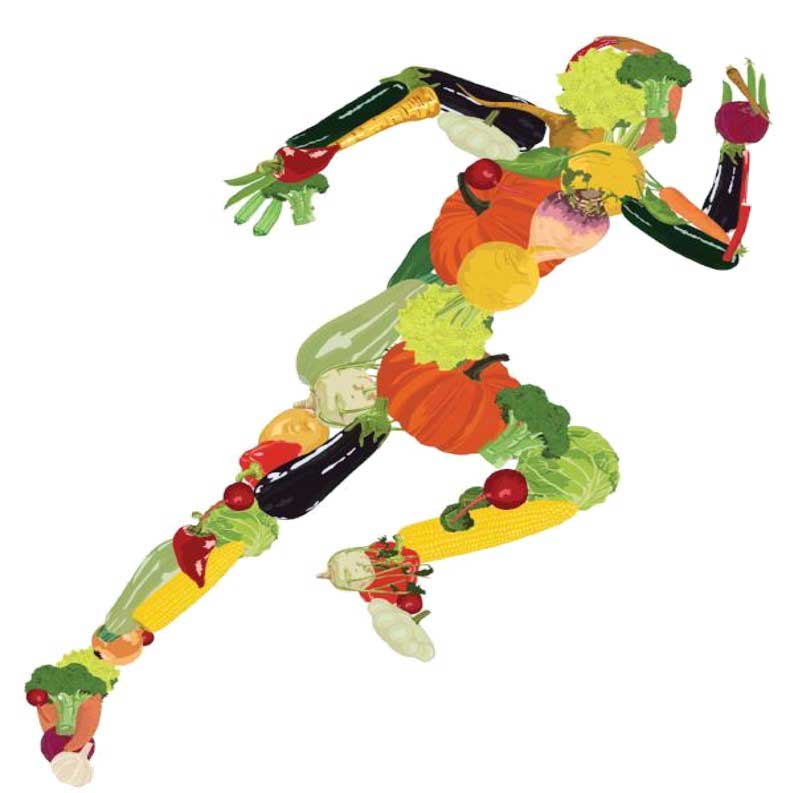
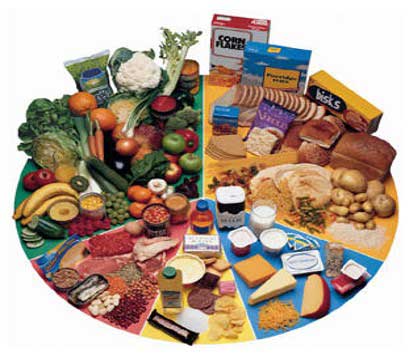

Nutrition is the science that interprets the interaction of nutrients and other substances in food in relation to maintenance, growth, reproduction, health and disease of an organism. It includes food intake, absorption, assimilation, biosynthesis, catabolism and excretion.
Good nutrition is an important part of leading a healthy lifestyle. Combined with physical activity, your diet can help you to reach and maintain a healthy weight, reduce your risk of chronic diseases (like heart disease and cancer), and promote your overall health.
Sports nutrition is the study and practice of nutrition and diet with regards to improving anyone's athletic performance. Sports Nutrition focuses on the type, as well as the quantity of fluids and food taken by an athlete.
Nutrition is important for athletes because it provides a source of energy required to perform the activity. The food we eat impacts on our strength, training, performance and recovery.
Sportspersons are all different and there is no single diet that meets the needs of all athletes at all times. They also need change across the seasons and must be flexible to accommodate this. Getting the right amount of energy to stay healthy and to perform well is the key. Eating too much leads to increase in body fat and eating too little has an adverse effect on performance and might lead to illness and injury. Good diet can contribute not only to the enjoyment of life but also help in the development of different motor components thereby ensuring success in sports.
History reveals that sportspersons have adopted special dietary regimens to improve their performance in order to have a competitive edge over their counterparts. Milo, famous wrestler of the ancient Greeks, who was never once brought to his knees over five Ancient Olympiads, ate enormous amounts of meat. Swimmer Jim Montgomery, winner of four gold medals in the 1976 Olympics, normally ate a breakfast consisting of eight eggs, a pound of bacon, a loaf of bread, and a quart of orange juice. Don Kardong, Olympic marathon runner, proudly boasted of his huge intake of ice cream, soda pop, cookies, pastries, and beer. Nancy Ditz, once America’s top ranked female marathoner, emphasized carbohydrates, and averaging 65 percent to 75 percent of her daily energy intake.
The report which appeared in the media during the Beijing Olympics that is Michael Phelps, the ace swimmer of USA, who won 23 gold, 3 silver and 2 bronze medals in Olympic games consumed 12,000 calories a day and this report created ripples among the nutrition experts, coaches and sportspersons. Every one looked at the calories consumed by this great sportsperson but no one paid attention to his training programme. It is reported that Phelps had been training for 72 hours per week, swimming 80km and also spending good amount of time working in the gym. His diet during breakfast included a large bowl of porridge, three doorstep sized sandwiches of white bread, butter, fried eggs, fried onion, lettuce, tomato and mayonnaise, a five-egg omelette tastefully garnished with parsley, three slices of French toast liberally sprinkled with sugar, three pancakes topped with chocolate chips, and two large cups of coffee. His lunch consisted of one pound (that’s a very large bowl) of pasta with tomato sauce, two large ham and cheese sandwiches with more lettuce, tomato, mayonnaise, plus four bottles of high-energy sports drink. For dinner he ate another pound of pasta, a large cheese and tomato pizza, and another four bottles of the same high-energy sports drink.
It is the intake of appropriate types and adequate amounts of food stuffs and liquids to supply nutrition and energy for maintenance of body cells, tissues and organs and support normal growth and development.
Carbohydrates are the major source of calories used by the human body to provide energy, cell maintenance and heat. They play an important role in the digestion and regulation of fat and protein metabolism. Each gram of carbohydrate provides four calories. The major sources of carbohydrates are breads, cereals, fruits, vegetables, milk and other dairy products.
These are the main substances used to build and repair tissues such as muscles, blood, internal organs, skin, hair nails, and bones. They are the part of hormones, enzymes, and antibodies and also used as a source of energy in the human body. The main sources of protein are poultry, white meats, fish, pulses and nuts. Each gram of protein provides four calories.
A small amount of fat is important for good health. A high fat diet has been closely associated with several diseases namely coronary heart disease, obesity and some cancers. It is also used as a source of energy in the human body and is also a part of the cell structure. However, fat requires more oxygen to produce energy and in view of this it is less efficient as a fuel source. Fat is used as stored energy and as an insulator for body heat preservation. The basic sources of fat are milk, dairy products and meats and alternates. Each gram of fat provides nine calories.
These are organic substances essential for normal metabolism, growth and development of the body. They are classified into two types based on the solubility: fat soluble vitamins (A, D, E and K) and water-soluble vitamins (B complex and C). The body cannot manufacture vitamins; they can only be obtained through the balanced diet.
These are inorganic elements found in the body and in food. They serve several important functions. Minerals are constituent of all the cells. They play very crucial role in the maintenance of water balance and the acid base balance. Minerals are essential components of enzymes, and they regulate muscular and nervous tissue excitability. Some of the minerals required in the body are calcium, iron, phosphorus, zinc, magnesium, sodium and potassium.
Water is the most important nutrient and is involved in almost every vital body process. Water is used in digestion and absorption of food, in the circulatory process, in removing waste products, in building and rebuilding cells, and in transport of other nutrients. Water is contained in almost all foods but primarily in liquid foods, vegetables and fruits. It is recommended that every healthy person should drink at least 8 to 10 glasses (about two liters) of water in a day in order to replace the water lost in sweat, urine, feces and expired air. Exercise enhances heat production in the body and therefore results in water loss from the body in the form of sweat. Excessive loss of water from the body can lead to dehydration. In view of this a sportsperson will need higher intake of water as compared to a less active or a sedentary person. In take of water is also influenced by the environmental factors such as heat, cold, humidity etc.
Make sure you are well hydrated before training and competition having your last drink about 15-20 minutes before the start. Drink at regular intervals (150 to 300 ml) ideally every 20 t0 30 minutes or whenever you have a break during competition. Do not wait until you feel thirsty, you will already be dehydrated. Water is fine or you may prefer to use a commercial carbohydrate drink, as this will also refuel your glycogen stores.
Even though dietary fiber is a type of complex carbohydrate yet because of its importance; it is being listed as a separate nutrient. We eat food to get energy and nutrients for the body. The foods that we eat are digested in the gut and the end products of digested foods are absorbed from the gut and enter into the circulation. Then the body uses these for energy and nutrients. But some of the plant foods are not digested by the enzymes in the gut and they are called dietary fibers. It is made up of plant material that cannot be digested by the human body. It is mainly present in leaves, skins, roots and seeds. Processing and refining foods removes almost all of the natural fiber. The main sources of dietary fiber are whole grains, cereals, breads, fruits and vegetables. The daily consumption of fiber for a male and a female is about 30gms and 25gms respectively.
What you eat on day-to-day basis has decisive influence on performance during training and competition. In addition to your systematic and scientific training it is your diet that will affect how fast and how well you progress, and how soon you attain your competitive standard. Once you get fully prepared to participate in competition, you will definitely think of ways and means to do your best. In this process the sportsperson is confronted with number of questions, which are as follows:
During the week before the competition, the sportsperson should enhance the glycogen stores so that he begins his competition with a full fuel supply. This is especially important for those sportspersons who are going to participate in endurance sport or competing in a number of heats over a short period. The best method to enhance the glycogen stores is to gradually reduce the training load during the final week before a competition, and to increase carbohydrate intake. Eat plenty of complex carbohydrates, to help boost your glycogen stores.
It has been suggested that the previous psychological set up of the athlete should not be disturbed by changing the diet schedule e.g. if an athlete prefers meat, egg or the diet of his or her choice, it may be given so that the sports person is not disturbed. However, some basic concept must be made clear to the sports person as to which diet will be useful.
Pre-competition diet should have sufficient calories and water. About 300 to 400 calories are sufficient and they should be given 2 to 3 hours before competition so that there is sufficient time for the food to get digested and absorbed. Fatty diet should be avoided. The pre-competition diet should be 80% carbohydrate because it takes less time for absorption. Fiber should be avoided.
In long duration activity like marathon, cycling and swimming glucose solution should be provided. It will help in maintaining glucose level during activity. The fluid should be such that it is absorbed from the stomach and intestine easily. The water intake of not more than 700ml/hr may be administered so that it is easily absorbed. A maximum of 200ml of water should be taken at one time.
It is suggested that after endurance activity liquid diet should be taken. Normal meals should be taken only after one hour of stopping of activity. This will help in quick recovery and restoration of muscular store of carbohydrate. Heavy meal immediately after training of competition should be avoided.
Sedentary Person
Energy Requirement During Activity